A Saturday Workshop for Women about Women


“There was a woman here who was loved.” Joy Harjo


February 20, 2010
10 a.m. to 4 p.m.


TRUE COLORS BOOKSTORE http://truecolorsbookstore.com/


SHARING OUR WOMEN’S STORIES: AN ORAL TRADITION will focus on stories of women in our lives. Stories of women in our families, and/or stories of women who have crossed our paths. Is there a particular woman you want to or need to write about?

This workshop is for writers and non-writers alike—everyone has stories!

Join Sherry Quan Lee and Lori Young-Williams for a lively and thought-provoking day of writing (letters, poems, and/or short narratives). We will use photos, maps, memorabilia, and history books. We will read stories by other women, as well as our own—stories recalled from great-grandmothers, grandmothers, mothers, sisters, aunts, and girlfriends.

This will be an engaging day of story sharing –written / visual / oral!!!

Cost for workshop: $40.00 plus a donation to True Colors bookstore of a used book or dvd. Please bring cash or check payment to the workshop. To register, e-mail Lori at youngwms@yahoo.com. Workshop limited to twelve participants.

Lori Young-Williams is a 41year old prose poet born in St. Paul. She comes from a working class family that believes in laughter, crying, and praying when times are good, bad or otherwise. Lori has one brother, one sister, and another sister who passed away when she was 14. She received her degree in Human Relationships with an emphasis in
family relationships at the University of Minnesota, 1992. Lori works a 9-5 job in Human Resources and Finance, but her passion is her writing. Most of her poetry is about her family—family relationships and how they impact her life. She has been published in Interrace magazine, the Turtle River Press, the National Library of Poetry, Quill Books, Dust & Fire and other anthologies. Also, she has self- published two chapbooks. She has read in various bookstores, coffee shops, and spoken word events in the Twin Cities. Lori recently was accepted as a participant for the Givens Black Writers Retreat, with
Sonja Sanchez and Carolyn Holbrook. She is currently working on her Master’s Thesis through the Master of Liberal Studies program at the University of Minnesota. She has studied with Rose Brewer, Carolyn Holbrook, Sherry Quan Lee, and others.
http://blog.lib.umn.edu/leexx065/writingmulticulturalidentity/

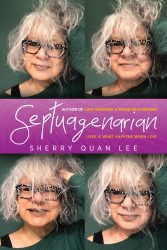
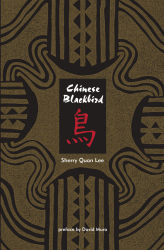
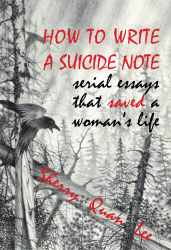
Sherry Quan Lee approaches writing as a community resource and as culturally based art of an ordinary everyday practical aesthetic. Quan Lee taught Creative Writing at Metropolitan State University for ten years, and continues to teach community workshops such as Stories that Save Lives, and Bookmaking. Currently she is a Program Associate for the Split Rock Arts Program Summer Workshops and Seasonal Retreats at the University of Minnesota. She has done consulting for SASE: The Write Place, a community based literary organization. She was a selected participant for the Loft Literary Center’s Asian Pacific Inroads Program, and in 2000 she was the mentor for that program. She was a selected participant for the Asian American Renaissance’s (AAR) Writers’ Block Program to mentor youth. She edited several of AAR’s annual journals, and curated AAR cabarets. Quan Lee was a selected participant for the first Cave Canem retreat for Black Poets in Esopus, New York. She earned an AA degree at North Hennepin Community College (has since been honored as a Distinguished Alumni), and a BA and MFA at the University of Minnesota. Quan Lee has edited Body of Stories, the fifth journal of the Asian American Renaissance, and Spirits, Myths and Dreams: Stories in Transit, the fourth journal of the Asian American Renaissance; as well as, I Am Who You Fear I Am, poems by Deborah Kelly, (distributed by Kitchen Table Women of Color Press) Corn Songs, poems by Virginia Allery (Turtle Mountain Reservation), and Chromosomes and Genes: an interracial anthology, (Guild Press, 1980’s). Quan Lee is the author of A Little Mixed Up, Guild Press, 1982 (second printing), Chinese Blackbird, a memoir in verse, published 2002 by the Asian American Renaissance, republished 2008 by Loving Healing Press, and How to Write a Suicide Note: serial essays that saved a woman’s life, Loving Healing Press, 2008. http://www.SherryQuanLee.com
http://www.blog.sherryquanlee.com

Share and Enjoy:
  • Print
  • Facebook
  • Google Bookmarks

Posted by Sherry - 01/02/10 - 0 comments


Word from my publisher and Ernest Dempsey, editor of the new journal RECOVERING THE SELF, http://www.recoveringself.com/ regarding speaking your poetry on the Web. Here’s an opportunity to get your poetic voice heard:

From Ernest,

You know I am omniscient and always go where no one has gone before. So let me surprise you with my audio poem at a new site that hosts audio poems. Mine is from my second poetry book Two Candles. The link is http://thepoetspeak.com/. If you would like to get your audio poem posted, feel free to contact the editor.

Wishing you all well,

Ernest

Look for Minnesota writer Theresa Crushon in current issue of RECOVERING THE SELF!

Share and Enjoy:
  • Print
  • Facebook
  • Google Bookmarks

Posted by Sherry - 13/01/10 - 0 comments


A Decade of Asian Am Spoken Word” Bai Phi, YourVoices, January 4, 2010

Check it out! This is the site I almost wrote for, but I had a change of mind (as you know, I may have a lot to say, but I don’t get it down in writing to say it very often). When the contract came back postage due, I knew I had made the right decision! But, now, Bao has started writing for YourVoices–yes, he used to skateboard in my neighborhood/my front yard with my sons–that’s what he told me–memory fades!

Is it too late, am I too old to become a Spoken Word Artist? Yes and no. How to memorize my own words? I ask students to memorize a poem, they sigh. I used to say, when I memorize my poems, I will know I am a poet. I’ve been writing poetry since second grade. This month I will be of social security age. I have only memorized one five line poem of mine. It’s enough. No pressure.

But, I do admire Minnesota’s Spoken Word Artists; I do appreciate Bao Phi’s work as an artist, and an activist–keeping Asian American voices visible and heard (what’s the antonym for silent? seriously. visible and loud? this is why I don’t blog often. wordsmithing? i get caught up in language. what words am i supposed to know and understand and use correctly? a topic for another blog entry. lunch is over. extended actually. another time)

Sherry

http://www.startribune.com/yourvoices/80632997.html?elr=KArks47cQiUdcOy_9cP3DiU47cQUU

Share and Enjoy:
  • Print
  • Facebook
  • Google Bookmarks

Posted by Sherry - 06/01/10 - 1 comment


Just a few tweaks to a holiday gift.  Time spent:  a lunch, an hour after dinner, a morning coffee break–a lifetime of New Years’ wishes.

Happy Holidays everyone.

XXXXXXXXXXX

you asked me for a poem. A clever and brazen
request. It’s not so easy. Poems come and go. Fly
like rage into the night; pink elephants big and heavy,
sobering. How to write a show poem full of dance
and song. Happy is a place I know, though who would believe it?
Words run amok telling stories bound in anger; reactions.
I am safe inside a poem.
Outside, when the wind blows bullets, I hunker low
eat silence, not so brave. Today,
I ask forgiveness. Talk and write from a gentle heart,
my gut recovering slowly. Forgive me for not knowing
the devil in men sooner than later. But do you believe
in fate? The world spins so quickly. I was afraid
I would be left dying, pronounced imperfect, immoral.
If intuitively I could have recognized love’s imperfections,
instead of believing because someone says he loves you
he loves you. Some clichés are to be taken seriously actions
speak louder than words (this is not about you). To speak/action.
Not to speak/inaction. A poet needs words, has faith in words.
You have asked for a poem. Here it is. You have said tell me
so I understand. Thank you. So here it is. You, I have taken
slowly. Cautious. Devil and angel. I embrace you, trustworthy,
with wild enthusiasm. I don’t expect devil to harm, nor angel
to deceive. Still, I won’t imagine conclusions because
I am not seeking endings. In answer to your question, yes,
I believe in fate; I also believe in choice. Thank you
for the conversation, please, more. Curiosity
is the Christmas gift I give to both of us.

Sherry Quan Lee
Copyright, December 21, 2009

Share and Enjoy:
  • Print
  • Facebook
  • Google Bookmarks

Posted by Sherry - 22/12/09 - 1 comment


Give the gift of a poem . . . .  


Don’t know what to give that special someone?  Three days ‘til Christmas eve, Kwanza five days away, a New Year just around the corner; whatever the occasion, don’t forget you can give a poem.  A poem costs nothing but your time, asks nothing more, nothing less than your heart. 


Recently, someone I met asked me for a poem.  I have thought about his request, not sure what poem I could write, or how to get started.  When faced with what to give someone I didn’t know well, but getting to know better every day, I realized the best thing to give would be what he asked for. 


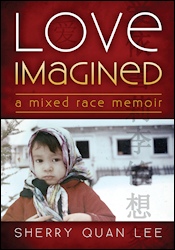
At lunch today, I was determined to write a gift poem.  I didn’t have time between my little seedless oranges, and salami crusted in black pepper and Colby cheese on dinner rolls, to spend any more time pondering.  So I said to myself, what is my “theme”?  Currently my theme is IMAGINED LOVE.  Such irony.


Here is the first draft of my gift poem (I will also be giving him the book Curious?: Discover the Missing Ingredient to a Fulfilling Life by Todd Kashdan .  Go ahead.  Write a gift poem today.  On your afternoon break.  Or, tomorrow at lunch.


No one to give a poem to?  Give it to me.  Or better yet, give it to the world.


NAME GOES HERE

asked me for a poem.  A clever and brazen

request.  It’s not so easy.  Poems come and go.  Fly

like rage into the night; pink elephants big and heavy,

sobering.  How to write a show poem full of dance

and song.  Happy is a place I know, though who would believe it? 

Words run amok telling stories bound in anger; reactions. 

I am safe inside a poem.

Outside when the wind blows bullets, I hunker low

and eat silence, not so brave.  Today,

I ask forgiveness.  Talk and write from a gentle heart,

my gut recovering slowly.  Forgive me for not knowing

the devil in men sooner than later.  But do you believe

in fate?  The world spins so quickly.  I was afraid

I would be left dying, pronounced imperfect, immoral. 

If intuitively I could have recognized love’s imperfections,

instead of believing because someone says s/he loves you

s/he loves you.  Some clichés are to be taken seriously actions

speak louder than words (this is not about you).  To speak/action.  Not

to speak/inaction.   A poet needs words, has faith in words. You have asked

for a poem and here it is.  You have said tell me so I understand

Thank you.  So here it is.  You, I have taken slowly. 

Cautious.  Devil and angel.   I embrace you, trustworthy,

with wild enthusiasm.  I don’t expect devil to harm, nor angel

to deceive.  Still, I won’t imagine conclusions because

I am not seeking endings.  In answer to your question, yes,

I believe in fate; I also believe in choice.  Thank you

for the conversation, please, more.  Curiosity

is the Christmas gift I give to both of us. 


Sherry Quan Lee

Copyright, December 21, 2009

First Draft

Share and Enjoy:
  • Print
  • Facebook
  • Google Bookmarks

Posted by Sherry - 21/12/09 - 0 comments


‘”You could write about this,” I suggested, ever the believer in the healing power of words. 

No, he said, no — he’d never write about it — …” ‘ –Catherine Watson, MinnPost, Dec.14, 2009


I haven’t written a blog entry in weeks, too many weeks. But I am constantly thinking about writing a blog entry. The longer I don’t write, the more I think about what to write, and the more I know that I want to write—but I just can’t get started. 


Mostly I write when something triggers my emotions.  It can be a book, a movie, a news event, something a friend said, something a stranger said.  I don’t only respond to things that anger me, though often that is the case. But, I also respond to things that move me to think, be sad, to laugh, to cry.  It could be something I fervently agree with, or something I fervently disagree with.


Catherine Watson writes for Minn Post   http://www.minnpost.com/catherinewatson/2009/12/14/14240/my_conversation_with_a_young_soldier_who_had_an_old_face  She also teaches for the Split Rock Arts Program  http://www.cce.umn.edu/Split-Rock-Arts-Program/


(I work for the Split Rock Arts Program and am happy to say Catherine Watson will be teaching “Into the Country of Memory:  A Retreat at the Cloquet Forestry Center”, July 11-16, 2010.)


Today, at lunch, I read Catherine’s recent MinnPost post “My conversation with a young soldier who had an old face.”   I believe, as Catherine, “in the healing power of words.”  But her story of a young man home from war, made me think about what we can’t write, what we don’t want to write, and why.  Catherine wrote what the young soldier couldn’t.    I believe this is the responsibility of a writer.  To tell the stories of those that can’t.  To give voice to those who don’t have a voice.   And, to tell “the worst stuff.”


“The things we ask them to do, I kept thinking. The secrets we ask them to keep. The memories we ask them to carry for the rest of their lives…”  Catherine Watson


Thomas Lux wrote the poem “The Voice You Hear When You Read Silently.” Here’s a short excerpt of his poem.


It is your voice

saying, for example, the word barn

that the writer wrote

but the barn you say

is a barn you know or knew. The voice

in your head, speaking as you read,

never says anything neutrally – some people

hated the barn they knew,

some people love the barn they know

so you hear the word loaded

and a sensory constellation

is lit:


The word “barn” likely means something more (or less) to the reader than what the writer wrote.  Catherine’s words for me were “loaded”.


My “barn” conjured stories of slaves.  What they were asked to do?  The secrets they were asked to keep.  And, Native Americans, Asians, Mexicans—people of color who cooked and cleaned, built railroads, picked crops—were raped, were murdered–atrocities/ secrets left out of history books for how many years?


Catherine Watson listened to a passenger on a plane sitting next to her.  She listened.  And she remembered.  And she shared.  I believe everyone can write and should write.  Catherine reminded me there can be obstacles.  It’s not always possible or easy to write.  It’s also not always a person’s choice to write.  Does that make their stories less important?  Does that mean if we tell their stories healing is not part of the equation? Do words have to be written down on paper to be powerful?  Is just listening enough?


I belong to a writing group.  We seldom sit down and write.  Sometimes, we don’t even talk about writing.  But, we tell stories.  Perhaps, eventually, we will write these stories, our own or each other’s.  Perhaps we will fictionalize them or not.  Although we are not strangers and we know we will see each other again, we are not so close we can’t tell our stories to each other.  We feel safe with each other. 


Although my life is mostly an open book, I think about the stories I don’t tell and the people I don’t tell them to.   My secrets.  The worst.  Or, what I am most afraid to tell, or even what I am afraid to ask.


Sherry Quan Lee

December 14, 2009

Share and Enjoy:
  • Print
  • Facebook
  • Google Bookmarks

Posted by Sherry - 14/12/09 - 0 comments


Excerpted from “Sinister Wisdom”, Issue #70 (Spring 2007)

Sherry Quan Lee’s book, Chinese Blackbird, is a fascinating narration of how race is lived in the United States today. Born to a Black mother and a Chinese father, much of Sherry Quan Lee’s life was spent understanding race as she lived it in the United States.  In the opening poem of the collection, she writes, “I am pregnant with myself / gestation: fifty years.” She comes to poetry later in life, but with the emotional power and languages of a convert.

Quan Lee describes her lfe, “Like a magnolia / –whose sepals never fuse00 / my life is disparate / here a Black / community, //there an Asian / community, // everywhere, white.” Chinese Blackbird is the narrative of Quan Lee’s life and her exploration of race, gender, love, and marriage. It is fierce and tender, angry and understanding, hurt and honest.

Some might call the book, not a poetry collection, but a textual gathering of one woman’s life. Indeed, the poems are accented by photographs of Quan Lee and her family and her birth certificate. They are important visual moves in the collection, adding connection for the reader to these poems. Many of the poems are written in the style of prose poems, such as “Magnolia Cafe,” “Mother’s and Mine,” and “I Ask My Husband if He Thought I was a Lesbian and He Said Yes.” This density of language and narrative builds throughout the book to Quan Lee’s final assertion of herself as an autonomous Chinese/Black/Woman in “I Am the Snake I feared,” she writes,

Sometimes I think I’m whispering
when you complain I’m hissing.

I’m sorry if my word are noisy, but

I haven’t left. I’m not leaving.
Only my thoughts wander

I am home, for the first time
in fifty-four years, venomless.

Quan Lee’s poems and this book, Chinese Blackbird, are the examples of the space and legacy that Jorddan and Lorde dreamed when they wrote their truth on the page.

Share and Enjoy:
  • Print
  • Facebook
  • Google Bookmarks

Posted by Victor Volkman - 29/11/09 - 0 comments


I have only a few chapters still to read in Sharon’s new book.  It is an honest and difficult, and important story.  Some parts of the story are hauntingly familiar, some parts of the story are hauntingly not familiar at all.

 Sharon Doubiago is one of my writing mentors.  She has strong connections to Minnesota/Minnesota writers, although this story is located in California where she grew up as a girl.


Sherry Quan Lee

Wild Ocean Press Announces the release of Sharon Doubiago’s Memoir My Father’s Love: Portrait of the Poet as a Young Girl 


My Father's Love

In this first volume of her two-volume memoir, prize-winning poet Sharon Doubiago writes an extraordinary story of growing up in the 1940s and 50s in South Central LA and the desert mountain town of Ramona in San Diego County. My Father’s Love addresses the current controversies of memory and memoir and sets new standards for the genre by adhering to historical records, letters, diaries, interviews, and a drive to know the unfabricated truth, while weaving these, in stunning language and imagery, with remembering and reliving. This book attempts to understand her family rooted deep in the history of America, in both its Southern aristocracy and its victims. It looks at the world through the eyes of a child who knows what love is, a girl labeled beautiful, a victim of rape, incest and psychological terrorism, depicting the genesis of an American epic poet. It will change your perspective of the world forever.

 To order, go to: http://www.wildoceanpress.com/


or: http://www.amazon.com/s/ref=nb_ss?url=search-alias%3Dstripbooks&field-keywords=doubiago&x=0&y=0

 www.sharondoubiago.com


Share and Enjoy:
  • Print
  • Facebook
  • Google Bookmarks

Posted by Sherry - 20/11/09 - 0 comments


From: victor@LHPress.com 

Subject: [ LHP/MHP titles available at Harvard Book Store, Boston

Because we are signed up with “On Demand” the Espresso book machine company, any place that installs the Espresso
> book-on-demand-printer can buy LHP/MHP books. The books are printed and ready for the customer in
> about 5 minutes time. The newest one was just installed at the Harvard Book Store in Boston, Mass.
>
>
> “First book published in America inaugurates Espresso unit in Boston”
>
> The independent Harvard Book Store inaugurated its new Espresso instant book machine, which can print a library-quality paperback book in just four minutes, on Sept. 29 by ordering it to spit out a copy of the first book published in America.
>
> The book, now in public domain, is Facsimile of First Edition of The Whole Booke of Psalmes Faithfully Translated into English Metre, commonly known as the Bay Psalm Book. It was the first book ever printed in the American colonies, in Cambridge in 1640.
>
> Author E.L. Doctorow – who was doing a reading later in the evening at the store – was on hand to help celebrate the machine’s christening.
>
> In a contest to name its new Espresso machine, Harvard Book Store selected the name Paige M. Gutenborg from a variety of entries. The store received more than 500 suggested names.
>
> The Espresso machine addresses two of the problem areas of the publishing business. First, publishers have always had to print and ship books to stores, which is costly and time-consuming. With a machine like the Espresso, all that needs to be shipped is a digital file. And at the end of a book’s shelf lives, those that go unsold are returned to publishers, who, according to the traditional consignment business model, buy them back. Again, this is costly, and for years authors’ royalty statements will show the cost of returns deducted from the money earned from sales of their books. With an Espresso, the bookseller need only print a book when a customer is ready to buy it, and returns could become moot.
>
> That’s still largely hypothetical, however. Only a few publishers have signed with On Demand Books, the company that makes the Espresso, to deliver digital files to its bookstore machines. But On Demand’s offerings expanded significantly – to the tune of two million public domain books – when it signed an agreement with Google earlier this month.
>
> On Demand as this was written had 16 machines installed at various stores, libraries and universities, and planned to make another 64 available in 2010. The machines are priced at $75,000-$100,000 each and have the capacity to generate around 60,000 300-page books a year.
>
> Confused: watch the video http://www.youtube.com/watch?v=zyNSap5XSv0 

 
>
Share and Enjoy:
  • Print
  • Facebook
  • Google Bookmarks

Posted by Sherry - 12/11/09 - 0 comments

 
I AM ALWAYS EATING


I am eating my lunch.  Seems like I am always eating.  I am hungry when I get to work and I’m hungry when I get home from work and I’m hungry when I go to bed, and when I wake up.  It’s not as bad as it sounds, I don’t always eat when I’m hungry, and I’m only ten, okay fifteen pounds overweight, but if you imagine a bowling ball in my tummy, the rest of me looks kind of good—I’m not a kid anymore as the saying goes, though the new sixty is the old what?  Twenty? Okay thirty.  Okay, sometimes I eat when I’m not hungry.  And, no, I don’t eat what I should, I eat what I want.  I like comfort food.  And I like food that reminds me of childhood, which is interesting because we were poor—need I say more.  Okay, our neighbor worked for Wonder Bread so we had our fill of Hostess Cupcakes and Twinkies.  Forget the Snowballs, none of us, my four siblings and I, liked coconut!


Where is this leading?  To storytelling.  Recently my friend Lori and I taught a storytelling/writing workshop.  We used various prompts to encourage the participants to write about women in their lives:  mothers, grandmothers, sisters, friends, mentors!  One of the storytelling prompts was food.  Who would have guessed that food would be the specialty of the day.  The hot lunch provided us provided all the sensory sensations we needed to get started:  taste, smell, sight, touch, sound!


We started by listing the foods we grew up with.  Amazing.  Naming.  What do the foods we listed tell us about who we are, about our families, about our race, our class, etc., etc.?  And yet, don’t try to assume who we are by the food we ate. We may have eaten Jell-O, but we may also have eaten drunken string bean chop suey!  Here’s my shout out:


Food Shout Out


Drunken string bean chop suey

Nankin Special Chow Mein

White Castle Hamburgers

Scrambled Hamburger

White rice

Hostess Cupcakes

Campbell Chicken Noodle Soup

Gingerbread

Swiss Steak

Goulash

Egg Fou Yung

Jell-O

Gov’t canned meat, powdered milk, and cheese

Salvation Army turkey at Thanksgiving


Have some fun, write your own list.  Have your friends write a list.  Pick something on the list and write a story about it.  See where that story meanders.  Discover a deeper meaning of White Castle Hamburgers!


And, to end where I should have started, I include here as reference, my intro to the hour presentation the participants and co-teacher guides gave, sharing our stories.  Food being one of them.


Also, check out these food Web sites.  They’re not just about food.


http://fairychef.blogspot.com/

http://tanglednoodle.blogspot.com/

http://www.lakitchenchicana.blogspot.com/


I would like to thank the UWOC council for inviting Lori and I to participate in today’s annual Fall Welcome and I would like to thank the women who participated in the workshop.  Lori and I met in a writing class in 1996, the year I graduated from the University of Minnesota’s MFA program.  I had never taught a class before, but Carolyn Holbrook gave me permission, and I taught my first class in a neighborhood coffee house.  Lori and I lost touch, but later reconnected at the first ever teleconference for Women in Education, organized by Dr. Nancy Barcelo.  Since, Lori and I have collaborated on a performance, Chinese Black White Women Got the Beat which we performed at several venues, including a reading sponsored by UWOC.  And we have been co-teaching interdisciplinary writing workshops for women of color.  Our workshops balance critical thinking and creative writing with in-person and online discussions.  Storytelling is the backbone of the workshop process as each participant recognizes the truth and substance of her stories, as well as the stories of other colorful women.    We examine the words/the lives of writers who have paved the way–wise women who have sorted through the muck, survived the muck, and risen above it:  Toni Morrison, Nikki Finney, Shay Youngblood, Edén Torres, Cherríe Moraga, Gloria Anzuldúa, Wang Ping, Linda Hogan, Nikki Giovanni, Audre Lorde, Leslie Marmon Silko, Toi Derricotte, Joy Harjo, Evelina Galang, Michelle Cliff, Sandra Cisneros, and many others.


Our workshops incorporate a holistic mapping process, written and visual.  We embrace our stories in all of their complexity in order to understand and challenge social or cultural obstacles to living healthy and productive lives.  We look in a mirror and see beauty, strength, wit, and wisdom.  We look at each other and see the same.


Storytelling.  It’s monkey mind.  It’s conversation.  It’s crafting our lives by crafting our words.  It’s claiming the past and imagining the future with no rules of craft or politics except the ones we, individually, choose, the ones that work for us.  Stories that save our lives enter the world like angels flapping their wings, creating music, something like jazz.  Someone will be listening.


The goal of our workshops is to break silence and invisibility by reading, writing, contemplating, and conversing; and, to imagine a future by breaking through barriers that have shut us out and shut us up.  Participants look within and without–and shout out, bringing their stories of survival and growth to others.


The UWOC storytelling workshop focused on the colorful women in the lives of the participants.  Lori and I did our best to condense our usual 3-4 day/ 4-6 hour sessions into a one day, six hour session.  Lori will tell you how that process worked.


Thank you.


Share and Enjoy:
  • Print
  • Facebook
  • Google Bookmarks

Posted by Sherry - 04/11/09 - 5 comments